

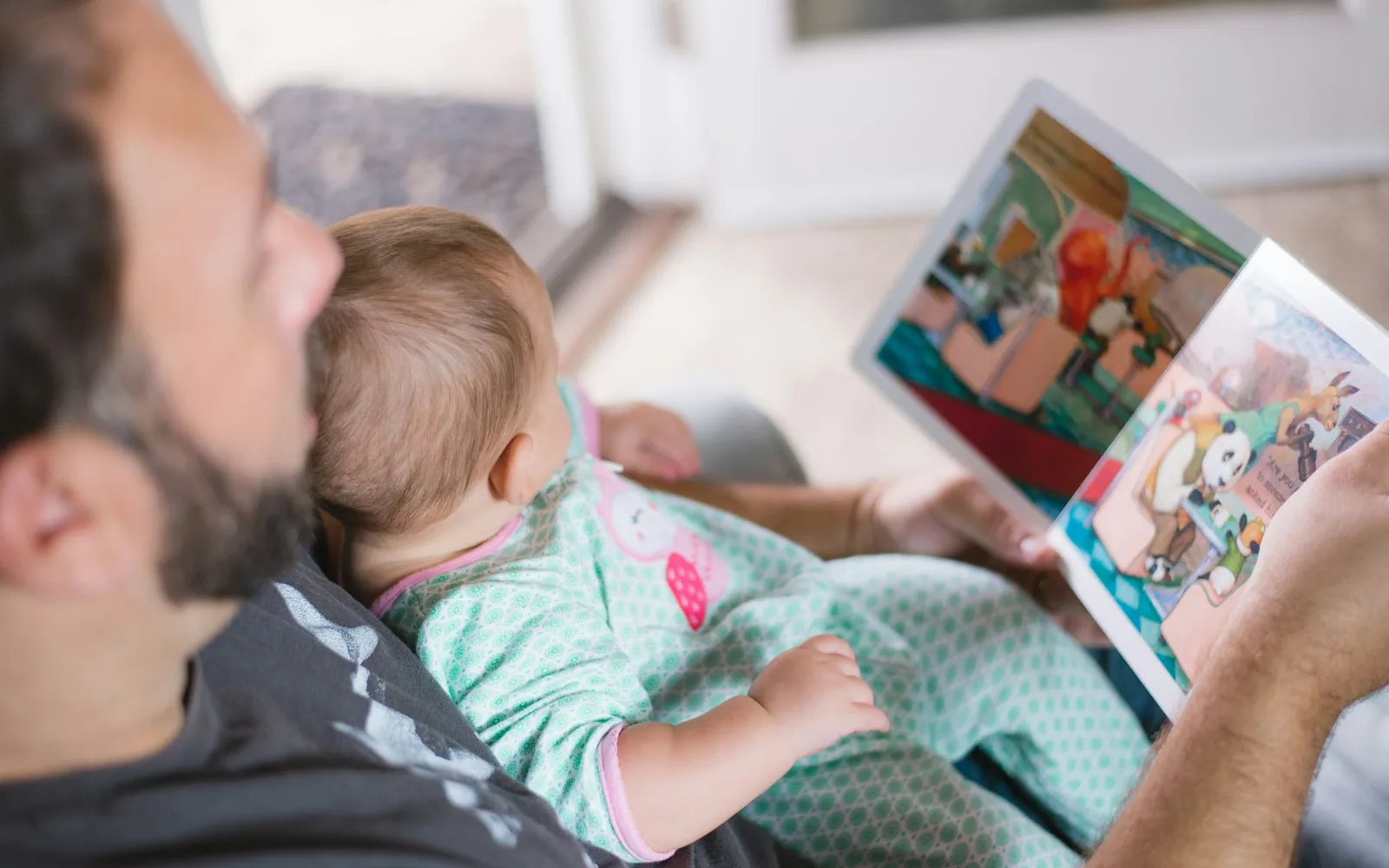
Write it down the same day, in their exact words, with their age and one line about what was happening. Keep one place both parents can add to from their phones. When you can, record a few seconds of audio, because the way they said it fades before the words do.
Why the words disappear so fast
Early language changes quickly. The CDC lists trying to say three or more words besides "mama" or "dada" among the things most children do by 18 months, and saying about 50 words by 30 months. Each new word replaces an old way of saying something. "Nana" becomes banana, and nobody notices the day it changed.
Parents describe the same thing online. One couple on r/toddlers kept a shared note of every word their daughter said from about six months until 18 months, then stopped because new words were coming faster than they could type. That's normal. You don't need every word. You need the ones that made you laugh or stop, and enough context to explain them later.
Your child won't remember this period either. A review of memory research puts the average earliest memory among adults in Western countries at 3 to 4 years. If you don't keep these words, nobody will.
What to write down
A quote on its own often stops making sense a year later. "Duncan!" means nothing until you add that it was her word for skeletons. For each one, try to keep:
- The exact words. Spell it the way it sounded, not the way it should be spelled.
- Their age. "2 years, 3 months" tells the story better than a date alone.
- What was happening. Where you were, what set it off, who was there.
- What they meant. If it was a mix-up, write the word they were reaching for.
- Who heard it. Especially if it was the other parent or a grandparent.
Beyond the funny quotes, it's worth catching their own names for people and pets, the song they always sang wrong, the first sentence, the first question, and the first time they told you about something that happened while you were apart. That last one starts early. A 2023 review of research on parent and child reminiscing notes that children begin referring to their own past at about 16 to 18 months, usually with just a word or two.
Five ways parents keep them
A shared note on both phones. This is the most common answer when parents compare notes on Reddit. Apple Notes and Google Keep both let you share a note, so either parent can add a line in the moment. It's free and fast. The downside is one long list with no photos, and it's easy to stop adding to it.
A small notebook in one fixed spot. On the fridge, by the changing table, in the car. Paper is lovely to look back on, but it isn't with you at the park.
An email address for your child. Many parents set one up at birth, send quotes and stories to it, and plan to hand over the password when their child is older. Every entry is dated for you. Sign in now and then, because Google's inactive account policy lets it delete a personal account that hasn't been used in two years.
Voice memos. A few seconds of audio keep what writing can't, like the pitch, the pauses and the giggle at the end. The catch is that many toddlers stop talking the moment a phone comes out. Start recording first, set the phone down out of sight, and carry on with what you were doing. Bath time, car rides and bedtime are often the chattiest moments.
A baby book or memory app. This helps when you want the quote next to the photo from that day. Look for one that both parents can add to, that keeps audio as well as text, and that lets you export what you wrote.
How to make it stick
- Write it the same day. By bedtime the exact wording has usually shifted in your head.
- Text it to yourself if you can't stop. Move it to your main place later.
- Pick one main place. Five half-used notes are harder to find than one long one.
- Look back once a month. Add the context you'll forget, like who "Duncan" is.
Then read them back to your child. Talking about the past together seems to matter. In a study that followed 115 families, mothers who were coached to talk about shared past events in rich, open-ended ways had children who gave richer accounts of their own memories at 2½ and again at 3½. A list of things your child once said gives you plenty to talk about.
If you're keeping a baby book as well, our post on what to write in a baby book, month by month has prompts for the rest of the first year.
Keeping their words with the photos
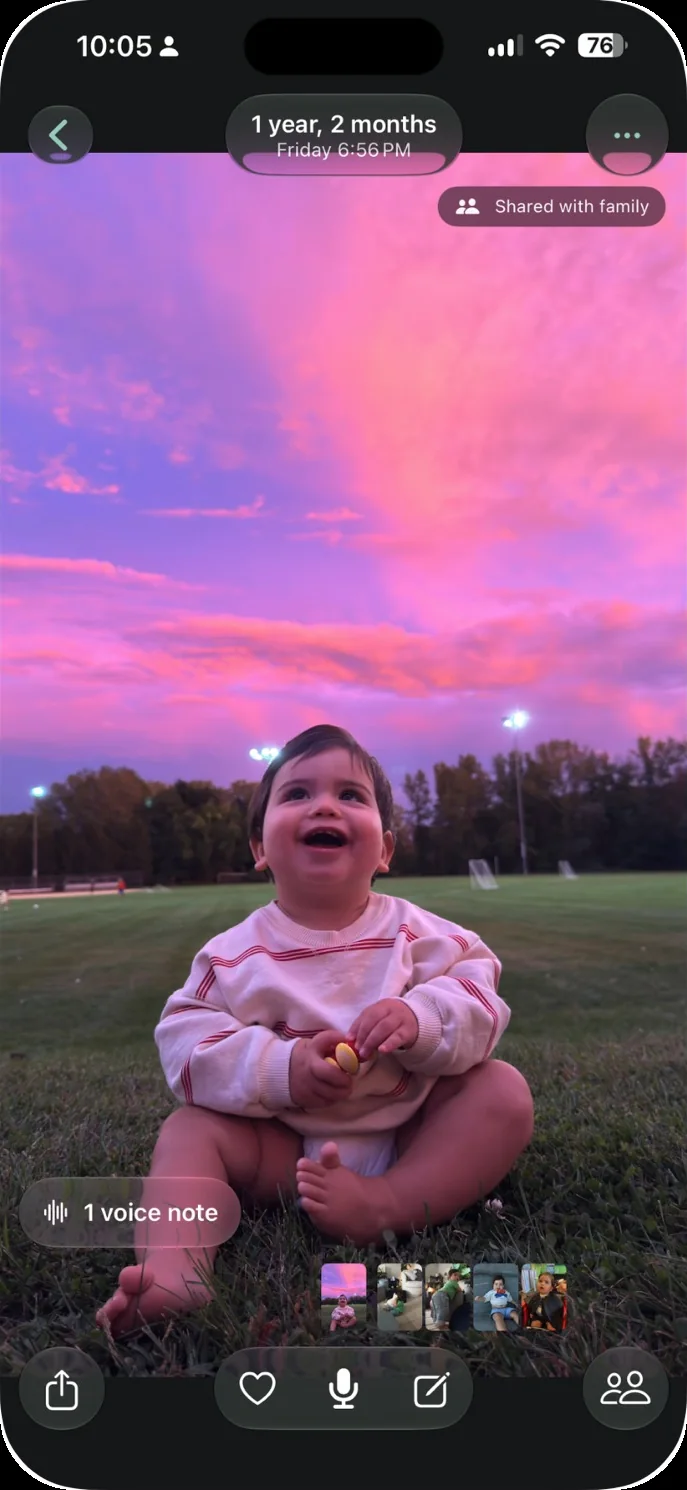
What made a quote funny is often in the photo from that day. The bath, the park, the grandparent's kitchen. That's why Our Little World lets you tap the mic on any photo and say what your child said, in your own voice. The app writes out the words on your iPhone and shows them with the note, on the day it happened. Once you've both said yes, the other parent sees your voice notes too, and you can turn that off in Settings. If your child is already past the baby stage, our page on a toddler memory book shows how it works from age one to five.